
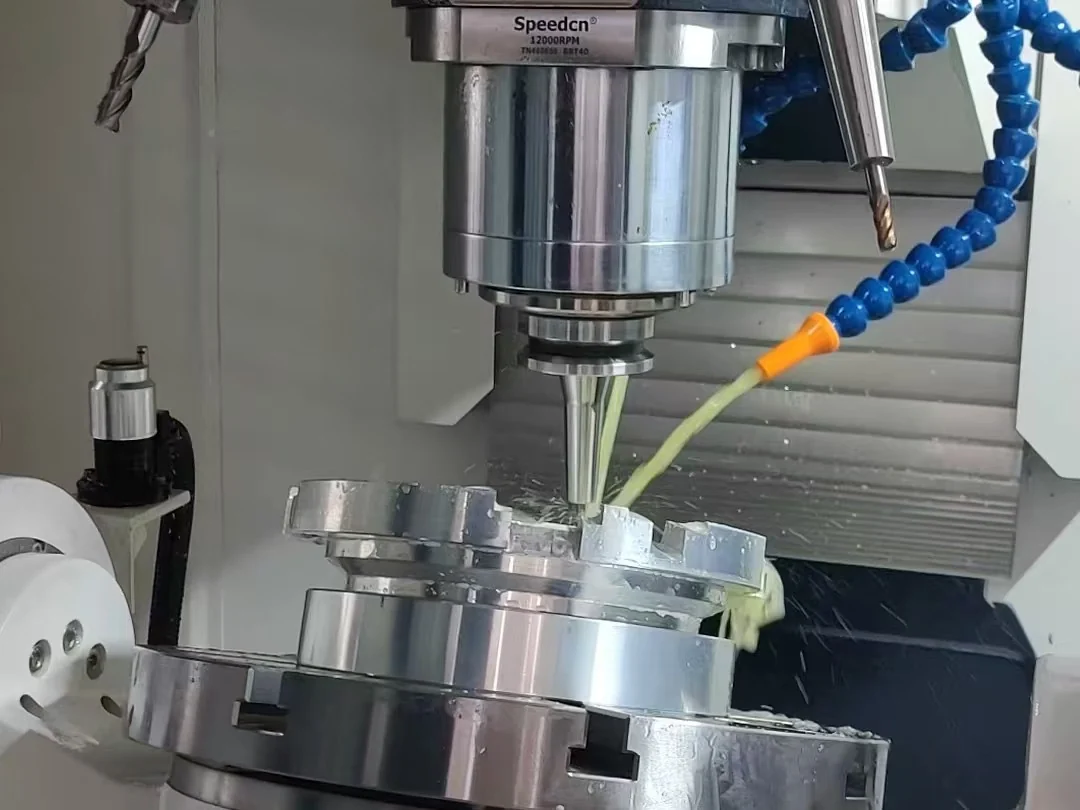
What does CNC mean?
CNC stands for Computer Numerical Control. A programmed machine moves its axes to cut a workpiece. In CNC machining, excess material is removed from stock to produce the required shape. The starting stock might be a plate, block or bar; the finished part might be a bracket, an enclosure or a shaft.
What happens between the drawing and the finished part?
A model describes the shape, while the drawing specifies requirements such as dimensions, threads and tolerances. The workshop plans the tools and operations, creates the machine program and secures the stock. Cutting is followed by deburring and the specified checks. Finishing is added when the part requires it.
- 01 · Drawing
- 02 · Programming
- 03 · Setup & cutting
- 04 · Inspection
Where do milling and turning fit in?
Both are CNC machining processes. Milling commonly creates flat faces, pockets and slots. Turning is commonly used for round features. One component can require several operations, so the process is selected from its features rather than from its name.
An example: a small equipment bracket
Imagine a bracket with a mounting face and two screw holes. Its outside shape is only part of the requirement: the face must sit correctly against the equipment, and the holes must match the mating component. This is why a useful drawing identifies the functional dimensions as well as the overall size.
How to start a CNC project
For a SANHE enquiry, gather the drawing or model, material, quantity and finish requirements. If the material or a fit is still being decided, describe how the part will be used so the review can focus on that requirement.