
Keypads & controls
Button arrays, flexible membranes and tactile interfaces. Review travel, return action and screen-printed legends alongside the assembled feel.
Key height · return action · screen-printed legends
From tactile keypads to seals and protective covers, connect material, hardness and geometry to the way your part will be used. Review the process from first sample to repeat supply.
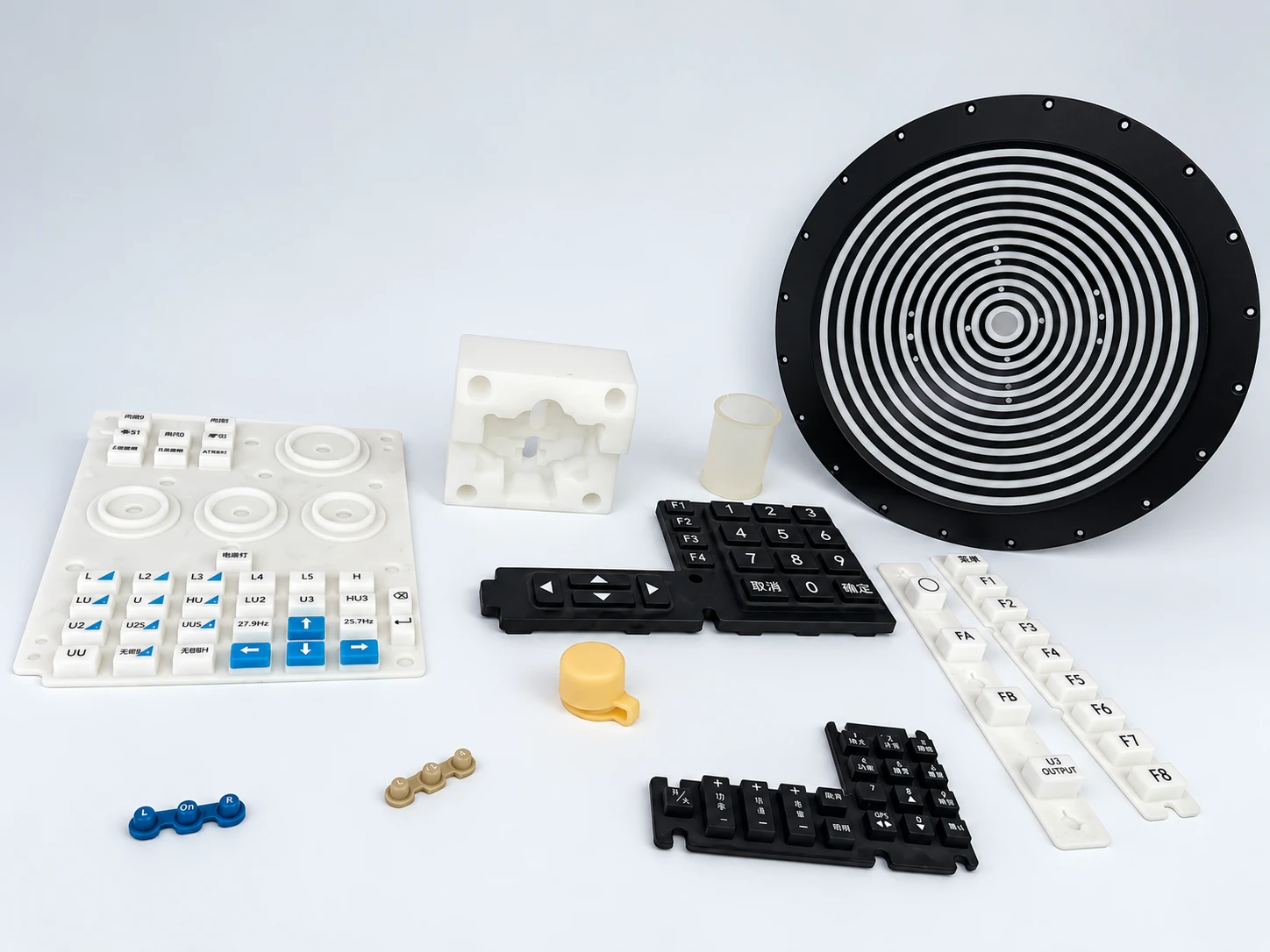
Appearance, tactile response and sealing each need a different set of acceptance checks.
Button arrays, flexible membranes and tactile interfaces. Review travel, return action and screen-printed legends alongside the assembled feel.
Gaskets, protective caps and sleeves. Review mating geometry, compression and the contact environment together.
Pads, flexible connectors and parts with inserts. Review deformation, positioning and how the materials connect.
Use these material families as a starting point. The specific compound and process follow the drawing and operating conditions.
| Material family | Where to begin | Confirm together |
|---|---|---|
| Silicone · VMQ | Consider for flexible keypads, covers and sealing components. | Grade, hardness, colour, tear resistance and use temperature. |
| Nitrile rubber · NBR | A material direction for parts exposed to oils or grease. | Specific fluid, concentration, temperature and deformation. |
| EPDM rubber | A material direction for weather exposure and selected water-contact uses. | Exposure conditions, fluid compatibility and compression. |
| Cast polyurethane elastomers | Rubber-like samples for shape, feel and assembly assessment. | Chosen resin data and suitability for the intended test. |
Provide the target hardness and scale, such as Shore A, plus permitted variation and the measurement location or specimen. Finished-part feel also depends on wall thickness, shape and assembly.
Confirm the manufacturing route and project scope before tooling or sample production.
Review a rubber or silicone compound and mould around the required geometry and quantity.
Use a master and silicone tool to produce selected elastomeric resin samples for design evaluation.
Review how a flexible material joins a rigid plastic or metal component.
The rubber keypads in the main photograph use screen printing for their legends and symbols. Before printing, confirm the artwork, print position, colour and a sample; agree ink compatibility, adhesion and abrasion checks for the intended use.
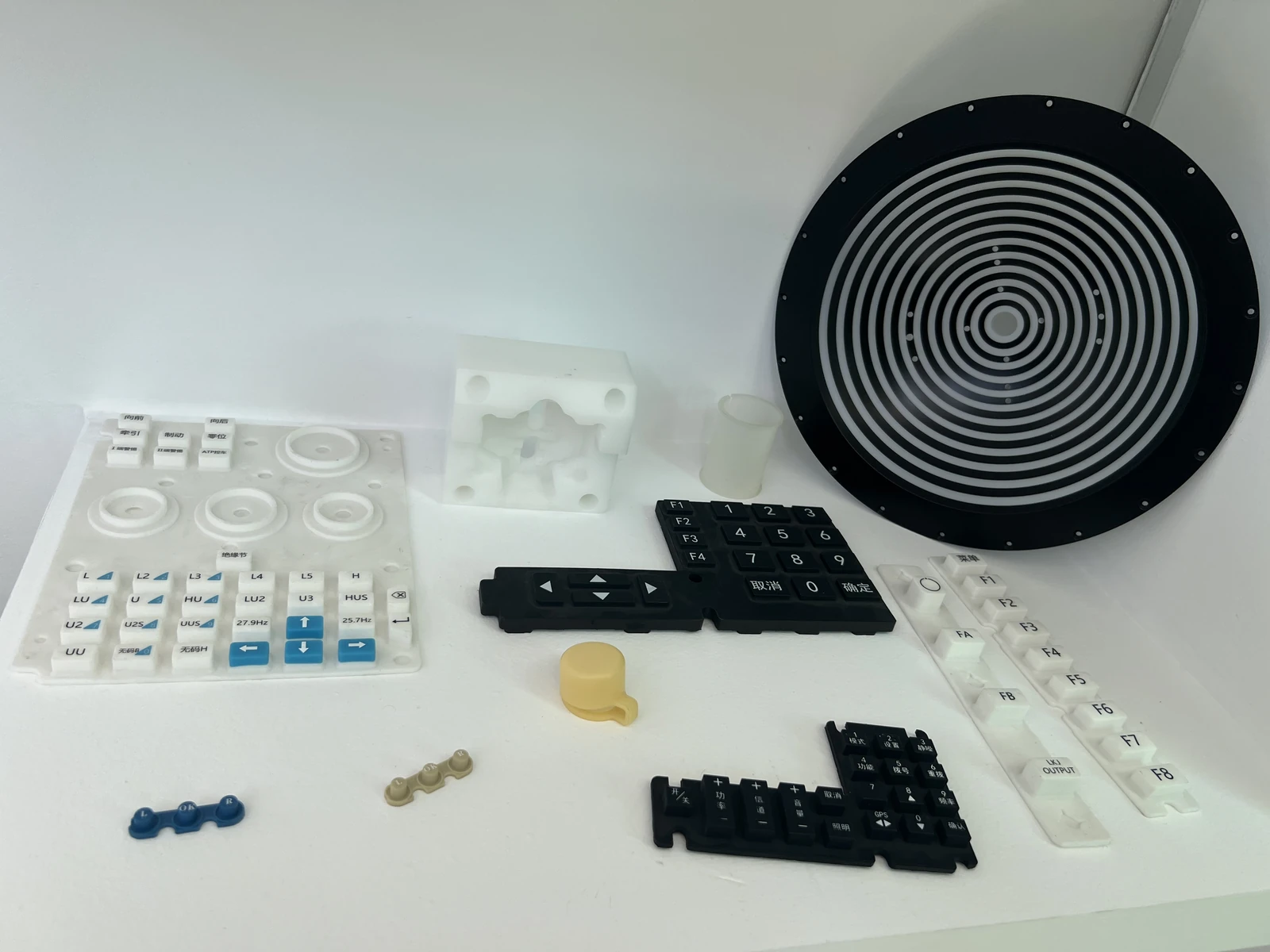
Check screen-print clarity, position, colour and completeness, plus bubbles, incomplete fill and flash. Agree adhesion and abrasion checks against the intended use.
Confirm critical dimensions and the agreed hardness measurement conditions.
Check mating parts, return action or sealing against the agreed test method.
Agree any functional tests and required records before production; protect surfaces and flexible features during packing.
Confirm geometry, grade, hardness, colour, quantity and use conditions.
Review parting, gates and inserts; approve a physical sample and acceptance criteria.
Follow the approved route through forming, trimming, keypad screen printing and any agreed assembly.
Check the agreed items, identify the batch and protect the parts for delivery.
Include a reference sample or mating-part information when available, so the review covers both manufacturing and assembly.
Send a rubber / silicone enquiryNo. The mould may be silicone while the cast part uses a selected polyurethane resin. Specify the finished material and required properties separately.
Hardness is one input. Key geometry, web thickness, travel, return action and the assembled interface also affect tactile response.
Freeze the drawing revision, material, appearance reference and acceptance requirements. Review changes to the mould or manufacturing route before repeat production.
Send your drawing, material, quantity and required delivery date.