
Material & thickness
Specify alloy or steel grade and nominal thickness.
Connect formed structures with the components they support. Review material, bends, joints, finish and assembly requirements together.
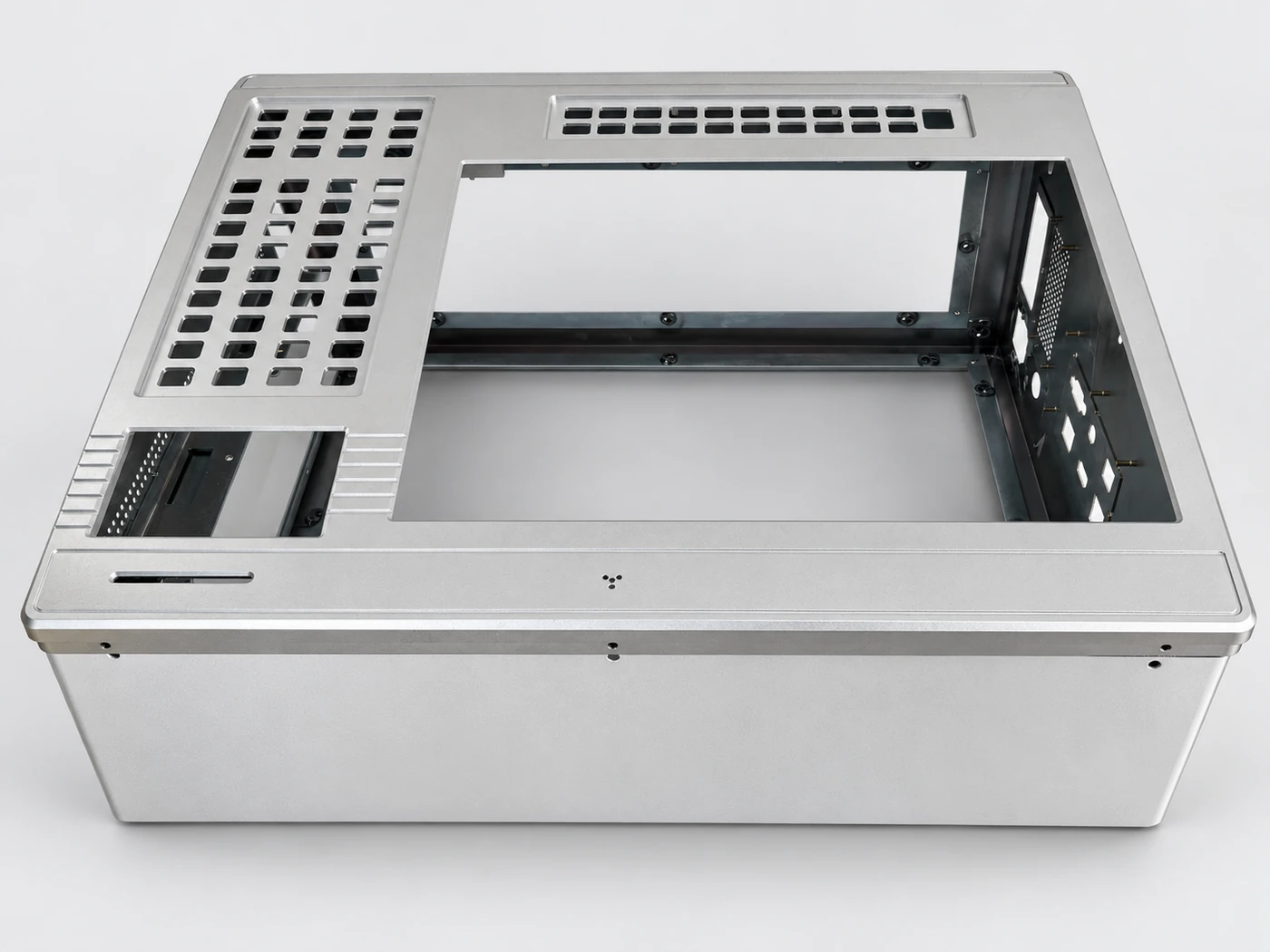
Sheet-metal details have different jobs: creating access, securing components, guiding airflow or enclosing an assembly.
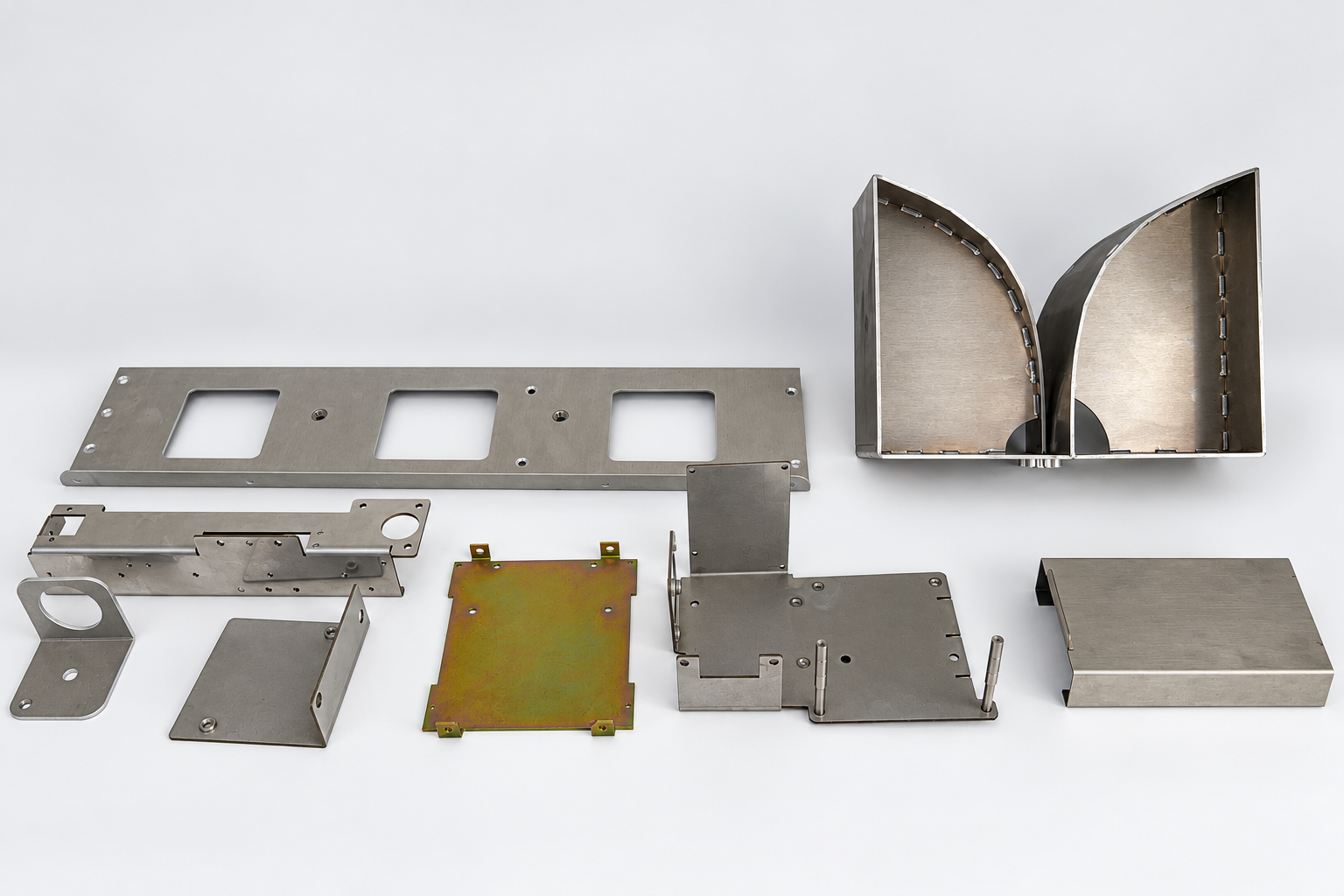
Define connector openings, ventilation slots, fixing holes and cosmetic surfaces together.
Check flange reach, bend access, hole position and clearance for fasteners.
Review seams, joining sequence and final shape before specifying the visible finish.
Rails, trays and mounting interfaces need to fit the parts they support.
Identify the assembly datum and fastener positions early. CNC parts and formed parts can then be reviewed against the same interface drawing, including coating allowance and grounding contacts.
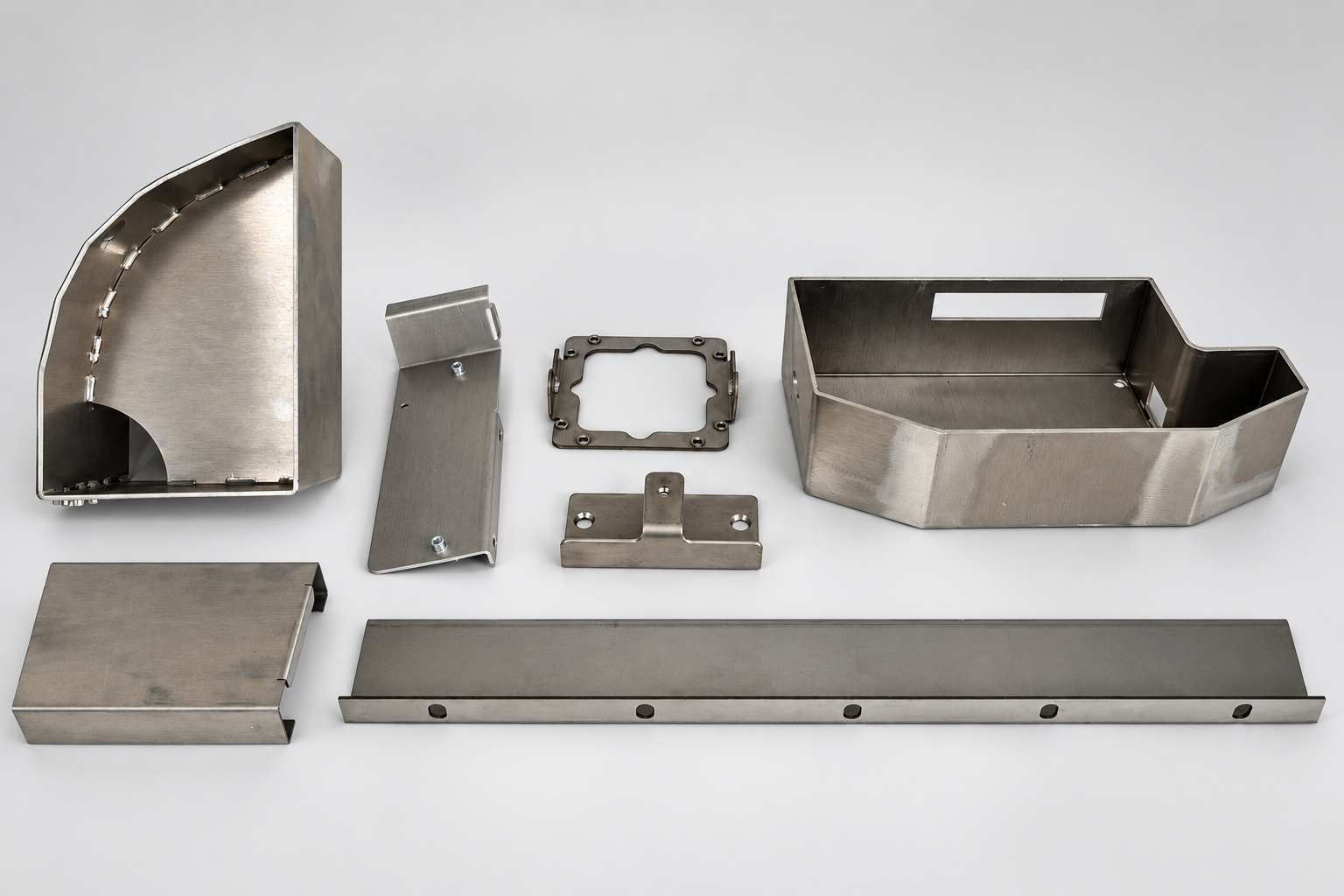
The supplied workshop information includes laser cutting, CNC punching, CNC bending, coating and assembly processes.
Produce profiles, slots and hole patterns; deburr edges before downstream work.
Arrange bend order around tooling access and the finished assembly envelope.
Select welding, riveted hardware or screws around loading, access and service needs.
Confirm powder coat or paint, masking, colour reference and protection of finished surfaces.
These details connect appearance, manufacturing and installation.
Specify alloy or steel grade and nominal thickness.
Identify bend direction, internal radius and critical hole locations.
Mark cosmetic faces, colour samples, texture and protected contacts.
Check overall size, interfaces, edge quality and final assembly fit.
Use the drawing and assembly context to set the manufacturing and supply scope.
Bends, returns and access
Welds, inserts and fasteners
Panel openings and mating parts
Approval points depend on the actual part and project scope.
Released model/drawing, target material and expected quantity.
Process access, interfaces, appearance and open questions.
Agree approval features and record any changes before the next quantity.
Confirm the revision, acceptance records and protective packing.
Include dimensional references, appearance and the records needed at receiving.
You can discuss NDA requirements before technical files.
Provide the model/drawing, material, quantity, application and critical interfaces. Add assembly references when the part joins other components.
Yes. Explain the known dimensions, function and available files so the review can identify what still needs definition before manufacture.
Agree the included operations or tool components, sample approvals, inspection and records in the project quotation and confirmed order.
Send your drawing, material, quantity and required delivery date.